
Last Friday, the Trump administration quietly moved a little closer to granting temporary relief from Obamacare. Friday’s action is not useless, but it does appear to signal a wasted opportunity.
The administration is preparing a regulation to change how the federal government interprets the law governing so-called “short-term limited duration insurance,” or STLDI. Only a few million people enroll in STLDI plans. The market has outsized importance, however, because it is one of only two kinds of health insurance that are exempt from Obamacare’s costliest health insurance regulations, the other being health insurance in US territories. Unlike territorial plans, STLDI is exempt from both Obamacare and nearly all other federal health insurance regulations. That is why STLDI plans can offer comprehensive health insurance to many or most Obamacare enrollees at premiums 60 percent (Congressional Budget Office) to 66 percent (Kaiser Family Foundation) below the lowest-price Obamacare plans.
Trump’s greatest health care victory was a 2018 regulation that provided relief from Obamacare by adding consumer protections to these plans. In 2016, President Obama tried to force reluctant consumers into over-priced, low-quality Obamacare plans by arbitrarily limiting STLDI plans to 3 months. The Obama rule tossed patients out of their coverage after they got sick, leaving them with nothing. In 2018, Trump clarified that it was perfectly consistent with federal law for STLDI contracts to last 12 months, for insurers to renew the initial contract for up to 24 additional months, and for insurers to issue separate renewal guarantees -- so that when consumers reached that 36-month limit, they could enroll in a new STLDI plan at healthy-person premiums, even if had fallen seriously ill. Trump clarified -- and two federal courts affirmed -- that federal law effectively leaves this market enough freedom to offer consumers long-term health insurance protection.
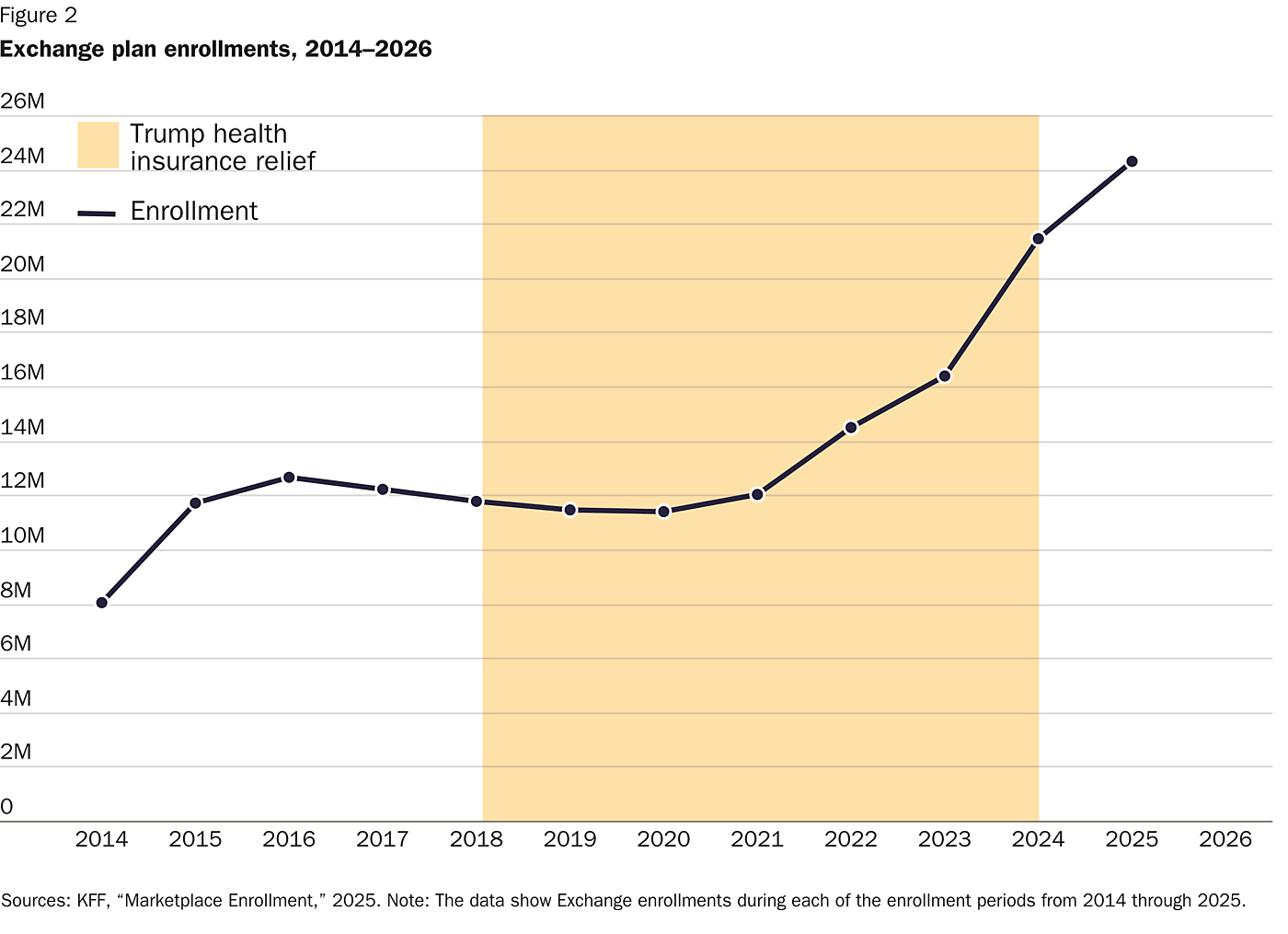
The Trump rule was a success. Premiums for comprehensive coverage fell. Consumers could purchase health insurance free from Obamacare’s quality-reducing regulations. Obamacare premiums did not spike and enrollment did not fall, as critics predicted. Instead, while the Trump rule was in place from 2018 to 2024, Obamacare premiums stabilized and enrollment increased.
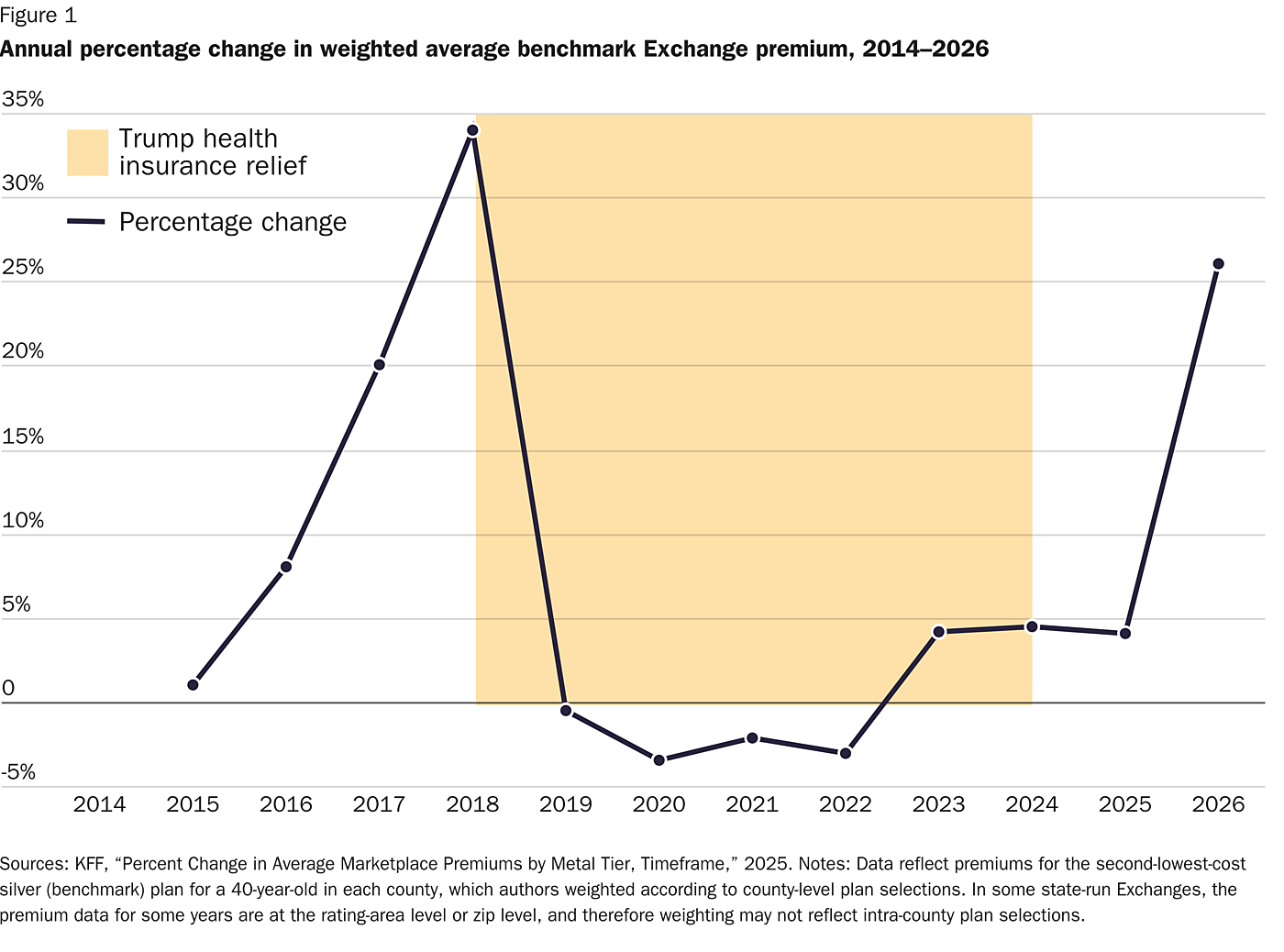
I don’t think the rule caused either development. But neither did it produce the dire consequences critics feared.
Nevertheless, in 2024, President Biden rescinded the Trump rule. Like Obama, Biden wanted to force reluctant consumers into over-priced, low-quality Obamacare plans. He limited STLDI plans to 4-month contracts and prohibited all renewals -- federal-court rulings notwithstanding.
The only flaw in the Trump rule is that it was not permanent. While it clarified that insurers were free to offer renewal guarantees, the fact that it was an administrative rulemaking rather than legislation meant that the next president could take that freedom away at the stroke of an autopen. So insurers did not have sufficient incentive to invest in renewal guarantees.
For months, the Trump administration has been debating how to promote health insurance affordability. On one side are those who support a regulation-only strategy, where the administration reissues the 2018 rule, even though the new rule may last as little as two years. This side is apparently unaware of the tremendous gains in freedom and affordability that would come from codifying the Trump rule, that they are sitting on a winning messaging strategy, and that experience with the Trump rule has already negated the critics’ fear-mongering. The savvier side of this debate advocates a legislative strategy, where Trump pushes Congress to make his greatest health care victory permanent, and pursues regulation only as a backup. Trump himself appeared to be on that side of the debate:
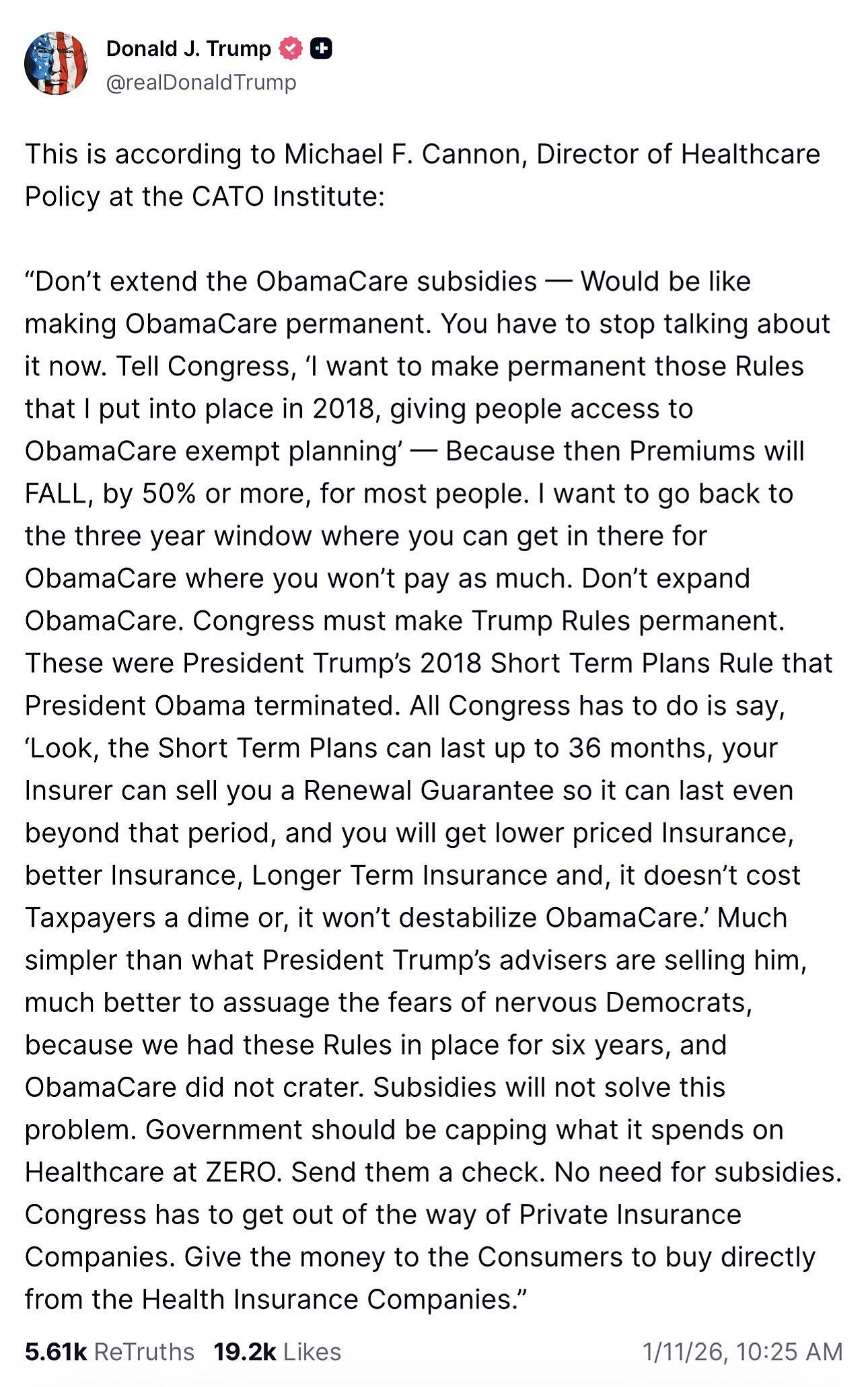
Unfortunately, the regulation-only side appears to be winning. The president’s Great Health Care Plan didn’t mention STLDI, much less demand that Congress codify the Trump rule. I have seen no indication from the administration that it plans to push Congress to do its job.
It is a tremendous waste of an opportunity. The administration can re-issue the 2018 rule. It can even improve on that rule. But any relief it provides would disappear with the next Democratic administration.
President Trump needs to push legislators to legislate. I’ve already provided the arguments, data, talking points, polling, poster child, graphs, and legislative language they need.
People are still struggling under the high cost of Obamacare. They need permanent relief.
With the stroke of the auto pen….+ short putt metaphor. Audience of one!